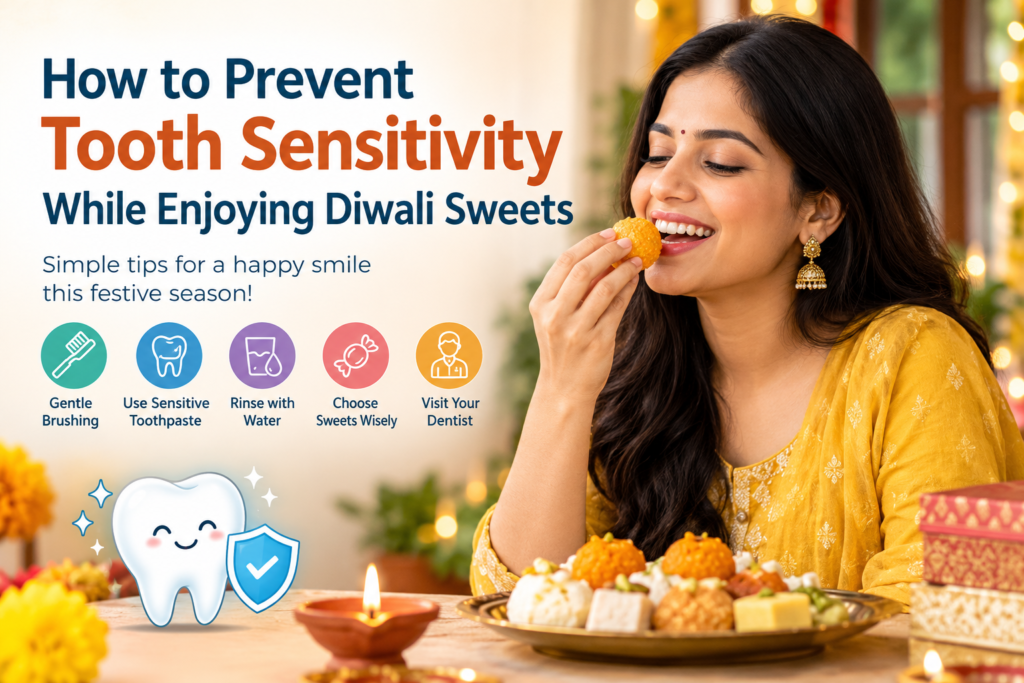
How to Prevent Tooth Sensitivity Diwali is a time for family gatherings, festive meals and sharing sweets with loved ones. From kaju katli and gulab jamun to laddoos and barfi, festive treats are an important part of the celebration. However, if you experience a sudden sharp sensation in your teeth while eating something sweet, enjoying these treats can become uncomfortable.
Tooth sensitivity is a common dental concern that may cause brief discomfort when eating sweets, drinking cold beverages or consuming hot foods. The sensation can range from mild discomfort to a sharp pain that makes you avoid certain foods.
Table of Contents
The good news is that a few simple dental care habits may help reduce sensitivity and protect your teeth during the festive season. Understanding the cause is equally important because sensitivity can sometimes indicate tooth decay, gum recession, worn enamel or another dental problem.
If you are wondering how to prevent tooth sensitivity while enjoying Diwali sweets, this guide explains the common causes, practical prevention tips and when to consult a dentist.
Why Do Your Teeth Become Sensitive When Eating Sweets?
Tooth sensitivity occurs when the inner layers of a tooth become more exposed to external triggers. Healthy enamel protects the outer surface of the tooth, while gums help cover and support the roots.
When enamel wears down or the gums recede, the underlying dentin may become exposed. Dentin contains tiny channels that connect with the sensitive inner part of the tooth. Sweet, cold, hot or acidic foods can trigger discomfort in affected teeth.
However, sensitivity when eating sweets does not always mean that your enamel is worn down. A cavity, a cracked tooth, a damaged filling or another dental issue may also cause pain.
Common causes include:
- Enamel erosion: Frequent exposure to acidic foods and drinks can gradually weaken the protective enamel.
- Gum recession: Receding gums may expose the roots, which do not have the same enamel protection as the crowns of teeth.
- Tooth decay: Cavities can cause sensitivity to sweets, temperature changes and pressure.
- Teeth grinding: Grinding or clenching may contribute to tooth wear and sensitivity.
- Cracked teeth: A crack may cause discomfort when biting or when exposed to temperature changes.
- Recent dental treatment: Some people experience temporary sensitivity after procedures such as whitening or certain restorative treatments.
If sensitivity occurs repeatedly in the same tooth, do not assume it is simply a seasonal problem. A dental examination can help identify the cause.
8 Tips to Prevent Tooth Sensitivity While Enjoying Diwali Sweets
You do not necessarily have to avoid every festive sweet if your teeth are healthy and your sensitivity is mild. Making a few changes to your eating and oral care habits can help protect your teeth.
1. Choose Your Sweets Wisely
Many traditional Diwali sweets contain sugar, and some are sticky enough to remain on the teeth for longer periods.
Sticky sweets such as chikki, caramel-based treats and certain sugar-rich confections can cling to tooth surfaces. This gives plaque bacteria more opportunity to produce acids that contribute to tooth decay.
You can reduce prolonged exposure by choosing smaller portions and limiting how frequently you snack on sugary foods throughout the day.
Enjoying a sweet with a meal rather than repeatedly eating small amounts between meals can help reduce the number of acid attacks on your teeth.
Remember that no particular sweet is completely risk-free for your teeth. The amount you eat, how often you eat it and your oral hygiene habits all matter.
2. Rinse Your Mouth With Water After Eating Sweets
After enjoying Diwali treats, rinse your mouth with plain water.
Water helps wash away some food particles and sugar residue while supporting the natural cleansing action of saliva. It is a simple habit that can be especially useful when you are visiting friends and relatives and cannot brush immediately.
Rinsing does not replace brushing or flossing, and it cannot treat an existing cavity. However, it can be a helpful addition to your daily dental care routine.
3. Brush Gently With a Soft-Bristled Toothbrush
Brushing twice a day with fluoride toothpaste helps remove plaque and protect your teeth against decay.
Use a soft-bristled toothbrush and gentle movements rather than scrubbing aggressively. Brushing too hard, particularly with an abrasive toothpaste, can contribute to gum recession and wear around the gumline over time.
Pay attention to the gumline and the surfaces of your back teeth, where plaque can accumulate.
If you have recently consumed acidic foods or drinks, avoid brushing immediately afterward. Acid temporarily softens the tooth surface, and brushing too soon may increase enamel wear. Rinse with water and wait around 30 to 60 minutes before brushing.
4. Use Toothpaste Designed for Sensitive Teeth
If you experience recurring sensitivity, a toothpaste formulated for sensitive teeth may help.
Depending on its ingredients, desensitising toothpaste can reduce the transmission of sensations through exposed dentin or help block the tiny channels responsible for sensitivity.
Use the product as directed on its packaging. Some formulations require regular use over several days or weeks before you notice improvement.
Choose a fluoride toothpaste to help strengthen enamel and prevent cavities. If sensitivity continues despite regular use, consult a dentist rather than relying on toothpaste alone.
5. Avoid Excessively Hot and Cold Foods
During Diwali, you may enjoy hot sweets, chilled desserts, ice cream and cold drinks. If your teeth are sensitive, sudden temperature changes may trigger discomfort.
Try eating foods at a comfortable temperature and avoid alternating between very hot and very cold items if they cause pain.
You can also use a spoon for chilled desserts rather than biting directly into hard or frozen foods.
If temperature sensitivity is new, severe or concentrated in one tooth, arrange a dental examination to check for decay, cracks or other problems.
6. Reduce Frequent Sugary and Acidic Snacks
Sugar is a major contributor to tooth decay when oral bacteria use it to produce acids. Frequent exposure gives teeth less time between acid attacks.
Acidic foods and beverages can also contribute to enamel erosion, which may worsen sensitivity.
During the festive season, try to enjoy sweets at planned times rather than grazing on them throughout the day. Limit frequent consumption of sugary drinks, acidic beverages and sticky treats.
You do not need to eliminate every festive food. The goal is to reduce repeated exposure and maintain consistent oral hygiene.
7. Avoid Brushing Too Hard
Some people believe that brushing harder will remove more plaque and protect their teeth better. In reality, aggressive brushing can damage the gumline and contribute to sensitivity.
Use gentle pressure and a toothbrush with soft bristles. Replace your toothbrush when the bristles become worn or frayed.
If you are unsure about your brushing technique, ask your dentist to demonstrate the correct method.
Abrasive whitening powders and unverified home remedies should be avoided, especially when your teeth are already sensitive.
8. Do Not Ignore Persistent Tooth Pain
A brief sensation that occurs occasionally may have a different cause from pain that lasts, returns frequently or worsens over time.
If a particular tooth hurts whenever you eat sweets, you may have tooth decay, a damaged filling or another issue that needs treatment.
Seek dental advice if you notice persistent sensitivity, pain while biting, a visible hole in a tooth, gum swelling or discomfort that interferes with eating.
Early diagnosis may help prevent a small problem from becoming more complicated.
Home Remedies for Tooth Sensitivity: What Actually Helps?
When tooth sensitivity interrupts your festive celebrations, it is natural to look for quick relief. Some simple measures may help reduce discomfort, but they should not replace appropriate dental treatment.
Rinsing with plain water: This can help remove food particles and dilute sugars and acids after eating.
Using desensitising toothpaste: Regular use may reduce sensitivity caused by exposed dentin, depending on the underlying condition.
Avoiding known triggers: Temporarily choosing foods at moderate temperatures and limiting acidic items may reduce discomfort.
Maintaining gentle oral hygiene: Soft-bristled brushing and regular flossing help protect your teeth and gums.
Avoid applying lemon juice, salt mixtures, undiluted clove oil or other harsh substances directly to sensitive teeth. Such remedies may irritate oral tissues or contribute to further damage.
If a cavity or cracked tooth is responsible for the pain, home care alone will not correct the problem.
Can Diwali Sweets Cause Tooth Decay?
Eating sweets does not automatically mean you will develop cavities. The risk depends on several factors, including how frequently you consume sugar, the condition of your teeth, plaque levels, fluoride exposure and your oral hygiene habits.
When bacteria in dental plaque use sugars from food, they produce acids that remove minerals from enamel. Repeated acid attacks can eventually lead to cavities.
Sticky sweets may remain on tooth surfaces longer than foods that are cleared more quickly. Frequent snacking also increases the number of times your teeth are exposed to sugar.
To reduce the risk of tooth decay during Diwali:
- Enjoy sweets in moderation and preferably with meals.
- Drink water after eating.
- Brush twice daily with fluoride toothpaste.
- Clean between your teeth every day.
- Attend regular dental check-ups.
These habits can help you enjoy festive food while supporting your long-term oral health.
When Should You Visit a Dentist for Tooth Sensitivity?
Tooth sensitivity should not be ignored when it becomes persistent or interferes with your daily routine.
Consider booking a dental appointment if:
- Your teeth hurt whenever you eat sweets.
- Sensitivity continues despite using toothpaste for sensitive teeth.
- Pain occurs in one specific tooth.
- You experience discomfort when biting or chewing.
- You notice a cavity, broken tooth or damaged filling.
- Your gums bleed, recede or appear swollen.
- Pain lasts after the hot, cold or sweet trigger has been removed.
Severe pain, facial swelling, fever or difficulty swallowing requires urgent professional assessment.
A dentist will examine the affected tooth and may recommend an X-ray or other investigations when needed. Treatment depends on the cause and may include desensitising care, fluoride treatment, a filling, a crown, gum treatment or another appropriate procedure.
Tooth Sensitivity Treatment in Hadapsar, Pune
If tooth sensitivity makes it difficult to enjoy everyday meals or festive sweets, identifying the underlying cause is the first step towards relief.
Dr. Swapna’s Advanced Dental Clinic in Gadital, Hadapsar, Pune, provides a place to discuss dental concerns and explore appropriate treatment options. During a consultation, a dentist can assess your symptoms and determine whether sensitivity is related to exposed dentin, tooth decay, gum recession, a damaged restoration or another issue.
The right dental treatment depends on your oral health, smile goals and the condition of your teeth. A dental consultation can help you understand the available options and choose a suitable treatment plan.
Visit Dr. Swapna’s Advanced Dental Clinic in Hadapsar, Pune
Dr. Swapna’s Advanced Dental Clinic is located at Orient Villa, D.P. Road, Gadital, Hadapsar, Pune, Maharashtra. If you are considering a smile makeover or need advice about damaged, worn or missing teeth, you can contact the clinic to discuss your concerns and explore suitable cosmetic and restorative dental treatments.
For more information, visit https://drswapnasdental.in/, call +91 87679 75948, or find the clinic on Google Maps.
Conclusion
Diwali is a time to enjoy your favourite sweets and spend time with family. Tooth sensitivity should not be dismissed as an unavoidable part of the festive season, especially when it occurs repeatedly or affects one particular tooth.
Simple habits such as brushing gently, using fluoride toothpaste, drinking water after sweets and reducing frequent sugary snacks can help protect your teeth. However, persistent sensitivity may indicate a problem that needs professional attention.
If you experience discomfort while eating sweets, consult a dentist to understand the cause and choose suitable treatment. With the right care, you can support your oral health throughout Diwali and beyond.
FAQs
1. Why do my teeth hurt when I eat sweets?
Sensitivity to sweets may occur when dentin is exposed due to enamel wear or gum recession. Tooth decay, cracks and damaged fillings can also cause pain. A dental examination can help identify the cause.
2. How can I prevent tooth sensitivity during Diwali?
Use fluoride toothpaste, brush gently with a soft-bristled toothbrush, rinse with water after eating sweets and limit frequent sugary snacks. If sensitivity keeps returning, consult a dentist to check for an underlying problem.
3. Which toothpaste is best for sensitive teeth?
A fluoride toothpaste formulated for sensitive teeth may help reduce discomfort. The best choice depends on your symptoms and oral health. Follow the product instructions and seek dental advice if the sensitivity persists.
4. Should I stop eating sweets if I have sensitive teeth?
You may not need to avoid every sweet, but choose smaller portions and limit frequent snacking. Avoid foods that trigger significant pain until you have identified the cause of your sensitivity.
5. Can tooth sensitivity be a sign of a cavity?
Yes. Cavities may cause sensitivity to sweets, hot and cold foods or biting pressure. However, sensitivity has several possible causes, so an examination is needed to confirm the diagnosis.
6. Do home remedies cure tooth sensitivity?
Home care may help manage mild sensitivity, but it cannot repair a cavity or cracked tooth. Desensitising toothpaste and gentle oral hygiene may help in suitable cases. Avoid applying acidic or abrasive substances to your teeth.
7. How long does sensitive teeth treatment take?
The timeline depends on the cause. Some cases improve with regular use of desensitising toothpaste, while cavities or damaged teeth may require dental procedures. Your dentist can explain the expected treatment timeline after an examination.
8. When should I consult a dentist in Hadapsar for sensitive teeth?
Consult a dentist if sensitivity is persistent, worsening, limited to one tooth or accompanied by pain while chewing, swelling or visible tooth damage. Severe pain or facial swelling requires urgent assessment.
9. Can brushing too hard cause tooth sensitivity?
Yes. Aggressive brushing may contribute to gum recession and wear near the gumline, exposing sensitive tooth surfaces. A soft-bristled toothbrush and gentle brushing technique can help reduce this risk.
10. Where can I get tooth sensitivity treatment in Hadapsar, Pune?
You can contact Dr. Swapna’s Advanced Dental Clinic in Gadital, Hadapsar, Pune, to discuss your symptoms and available treatment options. Visit https://drswapnasdental.in/ or use the Google Maps link above for direction.