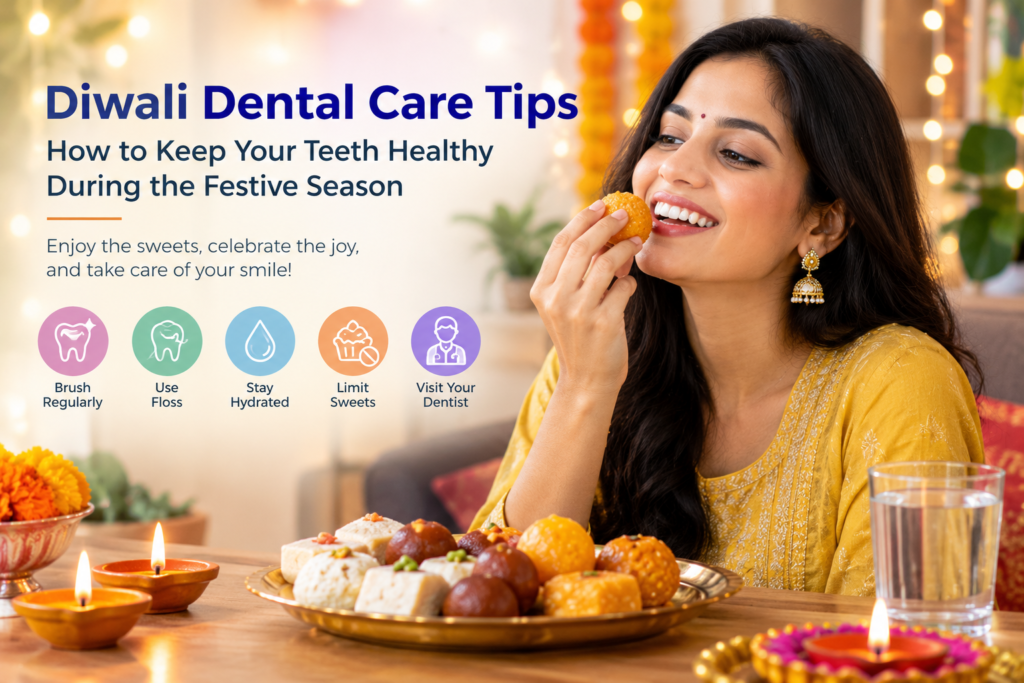
Diwali is a time for family gatherings, traditional sweets, celebrations and delicious festive meals. From laddoos and kaju katli to chakli and other snacks, food plays an important role in the festivities. While enjoying these treats is part of the celebration, it is also important to pay attention to your oral health.
Frequent snacking, sugary foods and changes in daily routines can increase the risk of plaque buildup, tooth decay and gum problems. Skipping brushing before bed or forgetting to rinse your mouth after eating sweets can also affect your dental health.
Table of Contents
Following simple Diwali dental care tips can help you enjoy the festive season while maintaining clean teeth and healthy gums. With consistent oral hygiene, mindful food choices and regular dental check-ups, you can protect your smile throughout Diwali.
Why Is Dental Care Important During Diwali?
During festivals, people often eat sweets several times a day rather than having them only after meals. Sticky sweets can remain on the teeth, while sugary foods allow bacteria in dental plaque to produce acids that gradually weaken tooth enamel.
When these acids repeatedly attack the teeth, the risk of cavities increases. Poor oral hygiene may also contribute to bad breath, gum irritation and plaque accumulation.
Here is why dental care during Diwali matters:
- Preventing cavities: Limiting frequent sugar exposure helps reduce the risk of tooth decay.
- Protecting tooth enamel: Good oral hygiene helps protect the outer surface of your teeth.
- Maintaining healthy gums: Regular brushing and cleaning between teeth help control plaque.
- Avoiding tooth sensitivity: Taking care of your enamel and addressing existing dental problems can help reduce sensitivity.
- Keeping your breath fresh: Cleaning your teeth and tongue helps reduce the bacteria responsible for unpleasant breath.
A few minutes of daily dental care can make a meaningful difference to your oral health during the festive season.
10 Diwali Dental Care Tips to Keep Your Teeth Healthy
1. Brush Your Teeth Twice a Day
Brushing twice daily is one of the most important oral hygiene habits. Use a soft-bristled toothbrush and fluoride toothpaste to clean your teeth gently for two minutes each time.
Pay attention to the front, back and chewing surfaces of your teeth. Avoid brushing too aggressively, as excessive pressure can irritate your gums and contribute to enamel wear.
During Diwali, your routine may become busy because of shopping, decorating and visiting relatives. Still, make sure you brush before going to bed, especially after enjoying sweets.
2. Rinse Your Mouth After Eating Sweets
You do not have to avoid every Diwali sweet to protect your teeth. However, rinsing your mouth with plain water after eating can help remove loose food particles and reduce the amount of sugar left in your mouth.
Water also helps maintain moisture in the mouth, which supports the natural cleansing action of saliva.
Rinsing is not a replacement for brushing or flossing, but it is a useful habit when you cannot clean your teeth immediately after a festive meal.
3. Avoid Frequent Snacking Throughout the Day
Eating sweets occasionally is different from eating small amounts continuously throughout the day. Every time you consume sugary food, bacteria in plaque can produce acids that attack tooth enamel.
Try to enjoy sweets with your regular meals rather than repeatedly snacking between meals. This reduces the number of times your teeth are exposed to sugar throughout the day.
For example, you can have a dessert after lunch instead of eating a sweet every hour during family gatherings.
This simple approach supports better dental health during festivals without requiring you to miss out on celebrations.
4. Choose Your Diwali Sweets Wisely
Traditional sweets vary in texture and ingredients. Sticky sweets, such as caramel-like confections and some dense sugary desserts, may cling to the teeth for longer periods.
Whenever possible, choose portions that you can enjoy comfortably without excessive snacking. Be especially mindful of sweets that stick between teeth or around dental fillings and crowns.
After eating, rinse your mouth with water. If food remains trapped between your teeth, clean the area gently with dental floss or an appropriate interdental cleaner.
Remember that even sweets made with natural ingredients can contain sugars that contribute to tooth decay. Portion size and eating frequency matter.
5. Drink Enough Water
Water is a simple but useful part of festive dental care. It helps wash away loose food particles and supports saliva production.
Saliva plays an important role in neutralising acids and protecting tooth enamel. A dry mouth can make it easier for food debris and bacteria to accumulate.
During Diwali, remember to drink water regularly, particularly if you are travelling, attending events or spending long hours outdoors.
Plain water is generally a better everyday choice for your teeth than sugary drinks, sweetened juices or soft drinks.
6. Do Not Skip Flossing
Brushing cleans the surfaces of your teeth, but it may not remove all the food and plaque between them. Flossing once a day helps clean these difficult-to-reach spaces.
This becomes especially useful during Diwali when food particles may remain between teeth after meals and sweets.
Use dental floss gently, moving it along the sides of the teeth rather than forcing it into the gums. If flossing is difficult, ask your dentist whether interdental brushes or another cleaning aid would be suitable for you.
Regular cleaning between teeth can help reduce plaque buildup and support healthy gums.
7. Be Careful With Hard Snacks
Diwali snacks such as hard chikki, brittle sweets and very hard nuts can put pressure on teeth. Biting down on hard foods may damage a weakened tooth, existing filling or dental crown.
If you have cracked teeth, large fillings or a history of dental problems, take extra care with hard snacks. Avoid using your teeth to open packaging, crack nuts or break hard food into smaller pieces.
Choose foods with a texture you can chew comfortably. If a tooth feels painful while biting, stop chewing on that side and arrange a dental evaluation.
8. Limit Sugary and Acidic Drinks
Sweetened beverages, soft drinks and acidic drinks can contribute to dental problems when consumed frequently. Sugar feeds plaque bacteria, while acids can soften the enamel surface.
During festive gatherings, choose plain water more often and keep sweetened drinks occasional. Avoid sipping sugary beverages over long periods.
If you consume an acidic drink, rinse your mouth with water afterwards. Wait around 30–60 minutes before brushing because brushing immediately after acid exposure may contribute to enamel wear.
9. Protect Your Teeth if You Have Sensitivity
Tooth sensitivity can make it uncomfortable to enjoy hot tea, cold drinks or sweet foods during Diwali. It may occur when dentine becomes exposed because of gum recession, enamel wear, tooth decay or other dental problems.
If you experience sensitivity, consider using toothpaste formulated for sensitive teeth and a soft-bristled toothbrush. Brush gently and avoid aggressive scrubbing.
Do not ignore sensitivity that is persistent, worsening or limited to one tooth. A cavity, crack, damaged filling or gum problem may require professional treatment.
A dentist can identify the cause and recommend suitable care instead of relying only on home remedies.
10. Schedule a Dental Check-Up if Needed
Festive preparations can make dental appointments easy to postpone. However, a check-up is important if you have ongoing toothache, bleeding gums, sensitivity, bad breath or discomfort while chewing.
A dentist can examine your teeth and gums, identify potential problems and recommend treatment before symptoms become more serious.
If you already have a dental concern, consider arranging an appointment before your schedule becomes busier. Routine check-ups can also help you maintain oral health throughout the year.
Common Dental Problems During the Festive Season
Understanding common dental concerns can help you recognise when your oral hygiene routine needs attention.
Tooth Decay and Cavities
Frequent sugar consumption and plaque buildup can contribute to tooth decay. Early decay may not cause noticeable symptoms, while more advanced cavities can cause pain or sensitivity.
Brushing twice daily with fluoride toothpaste, cleaning between teeth and limiting frequent sugary snacks can help reduce the risk.
Tooth Sensitivity
Sensitivity may occur when teeth are exposed to hot, cold, sweet or acidic foods. Causes can include enamel erosion, gum recession, cavities and damaged fillings.
Persistent sensitivity should be checked by a dentist to determine the underlying cause.
Plaque and Tartar Buildup
Plaque is a sticky layer of bacteria that forms on teeth. If it is not removed regularly, it can harden into tartar, which generally requires professional cleaning.
Daily brushing and flossing help control plaque, while a dental professional can assess whether a cleaning is needed.
Gum Inflammation
Redness, swelling or bleeding while brushing may indicate gum inflammation. Plaque buildup is a common contributing factor.
Continue gentle, thorough oral hygiene and seek dental advice if bleeding or swelling persists.
Bad Breath
Food particles, plaque, a dry mouth and gum problems can contribute to bad breath. Cleaning the tongue, brushing regularly, flossing and drinking water can help.
If bad breath continues despite good oral hygiene, consult a dentist to identify the cause.
Foods That Support Healthy Teeth During Diwali
Festive meals can include a variety of foods. Along with enjoying sweets in moderation, consider including foods that support a balanced diet and good oral health.
- Plain milk and unsweetened dairy products: These provide calcium and other nutrients that support teeth and bones.
- Cheese: Cheese contains calcium and can stimulate saliva production.
- Fresh vegetables: Crunchy vegetables can form part of a balanced diet and encourage chewing.
- Whole fruits: Enjoy whole fruit in reasonable portions rather than frequently sipping fruit juice.
- Plain water: Water helps rinse away loose food particles and supports saliva.
- Nuts that are safe to chew: Choose suitable textures, particularly if you have sensitive or restored teeth.
No single food can prevent cavities. A balanced diet combined with regular oral hygiene is the better approach.
Oral Hygiene Tips for Children During Diwali
Children often receive chocolates, sweets and festive treats from family members. Helping them maintain their dental routine is important.
Here are a few practical tips for parents:
- Supervise younger children while brushing to make sure they clean their teeth properly.
- Use an age-appropriate amount of fluoride toothpaste as recommended by dental professionals.
- Encourage children to enjoy sweets with meals instead of snacking on them throughout the day.
- Offer water after snacks and sweet foods.
- Avoid letting young children fall asleep with sugary drinks in a bottle.
- Arrange a dental appointment if a child has tooth pain, sensitivity or visible tooth damage.
Make dental care Pune a regular part of the festive routine rather than presenting it as a punishment for eating sweets.
What Should You Do if You Develop a Toothache During Diwali?
A toothache should not be ignored, especially if it continues or becomes more severe.
Until you can receive dental advice, you can take a few practical steps:
- Rinse your mouth gently with warm water.
- Clean carefully around the affected tooth to remove trapped food.
- Avoid very hot, cold, sweet or hard foods if they trigger pain.
- Do not place aspirin directly on the tooth or gums.
- Seek professional dental advice rather than relying on home remedies alone.
Seek urgent dental care if you experience severe pain, facial swelling, fever or difficulty opening your mouth. Difficulty breathing or swallowing with facial or mouth swelling requires emergency medical attention.
When Should You Visit a Dentist in Hadapsar, Pune?
Good oral hygiene helps prevent many dental problems, but it cannot treat every existing condition. Consider consulting a dentist if you notice:
- Tooth pain that continues or returns repeatedly.
- Sensitivity to sweets or temperature changes.
- Bleeding, swollen or tender gums.
- A broken tooth or damaged filling.
- Food repeatedly getting trapped in the same area.
- Persistent bad breath despite regular cleaning.
Professional dental assessment helps identify whether you need preventive care, a filling, gum treatment or another procedure.
If you are looking for a dentist in Hadapsar, Pune, choose a clinic where your concerns can be assessed and your treatment options explained clearly.
Visit Dr. Swapna’s Advanced Dental Clinic in Hadapsar, Pune
Maintaining healthy teeth during Diwali starts with consistent daily habits and timely dental care. If you have tooth sensitivity, discomfort while chewing, bleeding gums or concerns about your oral hygiene, a dental consultation can help you understand the cause and suitable next steps.
Dr. Swapna’s Advanced Dental Clinic is located at Orient Villa, D.P. Road, Gadital, Hadapsar, Pune, Maharashtra. If you are looking for a dental clinic in Hadapsar for an oral health assessment, you can contact the clinic to discuss your dental concerns and available treatment options.
For more information, visit drswapnasdental.in, call +91 87679 75948, or find the clinic using Google Maps.
Conclusion
Diwali is a time to enjoy traditions, family gatherings and festive food. You can enjoy your favourite sweets while taking practical steps to protect your teeth and gums.
Follow these Diwali dental care tips: brush twice a day, floss daily, drink water regularly, avoid frequent sugary snacking and pay attention to signs such as tooth sensitivity or bleeding gums. If you experience persistent discomfort, seek professional dental advice instead of postponing care.
A consistent oral hygiene routine can help you celebrate the festive season with a healthier smile and support your dental health long after Diwali ends.
FAQs
1. What are the best Diwali dental care tips?
Brush twice daily with fluoride toothpaste, floss once a day, drink water regularly, limit frequent sugary snacks and rinse your mouth after eating sweets. Keep up your usual dental routine even during busy celebrations.
2. Can eating Diwali sweets cause cavities?
Frequent consumption of sugary foods can increase the risk of cavities. Bacteria in dental plaque use sugars to produce acids that weaken tooth enamel. Enjoy sweets in moderation and maintain consistent oral hygiene.
3. Should I brush immediately after eating sweets?
You can rinse your mouth with water after eating sweets. If you have consumed acidic foods or drinks, wait around 30–60 minutes before brushing to reduce the risk of enamel wear.
4. How can I prevent tooth sensitivity during Diwali?
Use a soft-bristled toothbrush, brush gently and consider toothpaste designed for sensitive teeth. Avoid foods or drinks that trigger discomfort. Persistent or localised sensitivity should be assessed by a dentist.
5. How often should I brush during the festive season?
Brush twice daily for two minutes, including before bedtime. Clean between your teeth once daily and rinse with water after meals when convenient.
6. What should I do if my tooth hurts after eating a sweet?
Stop eating the food that triggers pain and rinse your mouth gently with water. Tooth pain may be associated with decay, a crack or another dental problem, so arrange a dental assessment if the pain persists or returns.
7. Where can I find dental care in Hadapsar, Pune?
Dr. Swapna’s Advanced Dental Clinic is located at Orient Villa, D.P. Road, Gadital, Hadapsar, Pune. You can visit the clinic website or contact the clinic to ask about dental consultations and available services.