
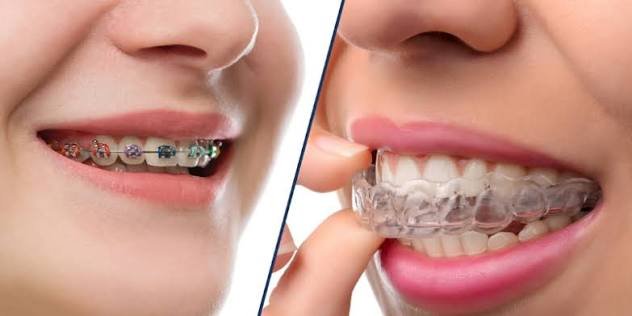
Braces vs clear aligners explained. Compare comfort, appearance, oral hygiene, treatment suitability and lifestyle before choosing teeth straightening. Choosing between braces and clear aligners can feel confusing. Both are designed to move teeth into better positions, but the treatment experience, appearance, daily routine and suitability can be quite different.
If you are considering teeth straightening, the better option is not necessarily the one that looks more modern or less noticeable. It depends on your teeth, bite, treatment requirements, lifestyle and how consistently you can follow the treatment plan.
Table of Contents
Understanding the differences between braces and clear aligners can help you have a more useful conversation with your orthodontist before starting treatment.
What Are Traditional Braces?
Braces use brackets attached to the teeth and a wire that applies controlled pressure to gradually move the teeth.
Depending on the treatment, braces can help address problems such as:
- Crooked or crowded teeth
- Gaps between teeth
- Certain bite problems
- Teeth that are positioned incorrectly
- More complex orthodontic movements
Braces remain a commonly used orthodontic treatment because they can be suitable for a wide range of cases.
They are also fixed, which means you do not have to remember to put them back in after eating or brushing.
What Are Clear Aligners?
Clear aligners are removable, transparent trays that are designed to gradually move the teeth.
Instead of brackets and wires, you wear a sequence of custom-made aligners. Each set is generally worn according to the orthodontist’s instructions before moving on to the next stage.
Clear aligners can be appealing to people who want a more discreet way of straightening their teeth.
They can also be removed while eating and during routine oral hygiene, which makes brushing and flossing more convenient for many patients.
Braces vs Clear Aligners: Key Differences
The biggest difference is how the treatment is delivered.
| Factor | Braces | Clear Aligners |
|---|---|---|
| Appearance | Visible brackets and wires | Generally less noticeable |
| Removable | No | Yes |
| Eating | Food restrictions may apply | Can usually be removed while eating |
| Cleaning | Requires extra care around brackets | Easier access to teeth when removed |
| Discipline | Fixed to teeth | Requires consistent wear |
| Suitability | Suitable for many types of orthodontic problems | Suitable for many, but not every case |
| Maintenance | Requires cleaning around brackets and wires | Aligners need regular cleaning |
The right choice depends on your individual orthodontic needs rather than this comparison alone.
Which Treatment Is More Comfortable?
Both treatments can cause some temporary discomfort, particularly after starting treatment or making an adjustment.
With braces, you may experience soreness after wires are adjusted. The brackets can also take some time to get used to.
Clear aligners may cause pressure or tightness when a new aligner is introduced. Some people also experience temporary changes in speech when they first begin wearing them.
Comfort can vary from person to person, so it is better to discuss what you may realistically expect rather than assuming one treatment will always be completely comfortable.
Which Is Better for Oral Hygiene?
Oral hygiene is important with both options.
With braces, food can become trapped around brackets and wires, making brushing more time-consuming. Special orthodontic cleaning tools may be recommended.
Clear aligners can be removed for brushing and flossing, which can make regular cleaning easier. However, the aligners themselves also need to be cleaned properly.
Neither option replaces the need for regular dental care.
Can You Eat Normally With Braces or Aligners?
Braces may require you to avoid or limit certain hard, sticky or chewy foods because they can damage brackets or wires.
With clear aligners, you normally remove the aligners before eating. This means you can generally continue eating your usual foods, subject to your orthodontist’s instructions.
However, aligners should be worn for the recommended amount of time each day. Frequently leaving them out can affect treatment progress.
Which Treatment Is Faster?
There is no universal answer.
Treatment time depends on factors such as:
- The amount of tooth movement required
- Your bite
- The complexity of the case
- Your age and dental condition
- Your response to treatment
- How consistently you follow instructions
Some cases may be treated efficiently with either option, while more complex cases may make one approach more appropriate than another.
Your orthodontist can provide a more realistic estimate after examining your teeth.
Are Clear Aligners Suitable for Everyone?
No.
Clear aligners can be an excellent option for many patients, but they are not automatically the best choice for every orthodontic problem.
The orthodontist needs to assess tooth position, bite, jaw relationship and the type of movement required.
If significant or complex tooth movement is needed, traditional braces or another orthodontic approach may be recommended.
This is why choosing aligners simply because they are less visible is not always the right decision.
What About Braces for Teenagers and Adults?
Braces are not limited to children or teenagers. Adults can also undergo orthodontic treatment when their teeth and gums are suitable.
Many adults choose clear aligners because of their appearance and removable design, while others prefer braces because they do not need to remember to wear them.
For teenagers, parents and patients may want to consider factors such as responsibility, lifestyle, sports, school activities and treatment complexity.
The most suitable option is the one that fits both the clinical requirements and the patient’s ability to follow the treatment plan.
How an Orthodontist Helps You Choose
A consultation is the best place to compare braces and clear aligners for your specific case.
Your orthodontist may examine:
- Tooth alignment
- Crowding and spacing
- Your bite
- Jaw relationship
- Gum and dental health
- Previous orthodontic treatment
- Your expectations and lifestyle
After the assessment, the orthodontist can explain which options are suitable and why.
For someone searching for an orthodontist in Pune, it is useful to choose a clinic where treatment options are discussed based on individual assessment rather than recommending the same solution to every patient.
Questions to Ask Before Starting Treatment
Before choosing braces or clear aligners, consider asking:
- Which treatment is suitable for my teeth?
- How complex is my case?
- What results can realistically be expected?
- How long could treatment take?
- How often will I need appointments?
- Will I need retainers after treatment?
- What are the advantages and limitations of each option?
- What happens if I do not wear my aligners as instructed?
- Are there any foods or activities I should avoid with braces?
Getting clear answers can help you make a decision based on your actual orthodontic needs.
Braces or Clear Aligners: Which One Should You Choose?
There is no single answer that applies to every patient.
Braces may be a better option when:
Your case requires orthodontic movements that are better managed with fixed appliances, or when you prefer not to manage removable trays.
Clear aligners may be a better option when:
Your orthodontic problem is suitable for aligner treatment and you prefer a more discreet, removable approach and can consistently follow the wearing instructions.
The important point is that appearance should not be the only factor. Treatment suitability, bite correction, oral health and your ability to follow the treatment plan all matter.
Making the Right Choice for Your Smile
Braces and clear aligners can both play an important role in orthodontic treatment, but the right choice starts with a proper assessment.
Instead of choosing a treatment only because it is popular or looks less noticeable, discuss your teeth, bite, lifestyle and treatment expectations with an orthodontist. A personalised assessment can help you understand which option is appropriate for your case and what the treatment process may involve.
If you are looking for braces in Pune or clear aligners in Pune, schedule an orthodontic consultation and compare your options based on your individual dental needs.
At Dr. Swapna’s Advanced Dental Clinic, patients can discuss their orthodontic concerns and understand whether braces or clear aligners are more suitable for their individual needs.
Dr. Swapna Khandale focuses on assessment-based treatment planning, helping patients understand their options before beginning teeth-straightening treatment.
FAQs
Are clear aligners better than braces?
Not necessarily. Clear aligners and braces have different advantages and limitations. The appropriate option depends on your orthodontic condition and treatment goals.
Are clear aligners completely invisible?
They are designed to be discreet, but they may still be visible at close range. Their appearance can also depend on the design and how they fit.
Can I switch from braces to clear aligners?
In some situations, a treatment plan may be modified or changed. However, this depends on your individual case and should be decided by your orthodontist.
Do braces or aligners hurt?
Both can cause temporary pressure or soreness as teeth move. The level of discomfort varies between patients.
Do I need retainers after braces or aligners?
Retention is commonly an important part of orthodontic treatment because teeth can naturally shift after active treatment. Your orthodontist will advise you about the appropriate retainer and wearing schedule.