
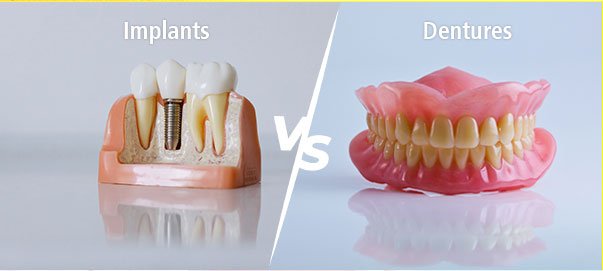
Compare Dental Implants vs Dentures, including comfort, stability, cost, maintenance and implant-supported dentures for missing teeth. Losing one or more teeth can affect much more than your smile. It may make chewing uncomfortable, change the way you speak, or make you hesitant to eat certain foods in front of others. Fortunately, modern dentistry offers several ways to replace missing teeth, with dental implants and dentures being two of the most commonly considered options.
But choosing between them is not simply about deciding which treatment is “better.” Your oral health, number of missing teeth, jawbone condition, budget, lifestyle, and long-term expectations all matter.
Table of Contents
So, when comparing dental implants vs dentures, how do you know which option may suit your situation?
This guide explains the practical differences between the two, what the treatment process generally involves, and the questions worth discussing with a dentist before making a decision.
What Are Dental Implants?
Dental implants are artificial tooth roots designed to support replacement teeth. A small implant is placed into the jawbone, where it can integrate with the surrounding bone over time. Once the area has healed sufficiently, a dental crown, bridge, or other restoration can be attached.
One of the main differences between implants and traditional dentures is how they are supported.
Dentures rest on the gums and may be removable, while implants are anchored within the jawbone. This can provide a more stable foundation for a replacement tooth.
A single missing tooth may be replaced with an implant and crown. When several teeth are missing, multiple implants may support a dental bridge or an implant-supported denture.
However, dental implants lifespan are not suitable for every person automatically. A dentist needs to assess factors such as bone volume, gum health, overall oral health, and the condition of the remaining teeth.
What Are Dentures?
Dentures are removable dental appliances designed to replace several missing teeth or an entire arch of teeth.
Depending on your needs, you may have:
- Complete dentures: Replace all teeth in the upper or lower arch.
- Partial dentures: Replace several missing teeth while some natural teeth remain.
- Implant-supported dentures: Use dental implants to provide additional support for a removable or fixed denture, depending on the treatment design.
Dentures can be made to fit the shape of your mouth and are generally easier to remove for cleaning and maintenance.
For someone who has lost many teeth, dentures can provide a practical tooth replacement option without requiring an implant for every missing tooth.
Dental Implants vs Dentures: Key Differences
Dental Implants vs Dentures There is no single answer that applies to everyone. Looking at the major differences can make the decision easier to understand.
| Factor | Dental Implants | Traditional Dentures |
|---|---|---|
| Support | Anchored to the jawbone | Rest on the gums |
| Removable | Usually fixed, depending on restoration | Generally removable |
| Treatment time | Usually involves multiple stages | Often completed without implant healing |
| Stability | Designed for strong stability | May move, particularly if fit changes |
| Maintenance | Brushing and regular dental care | Requires removal and denture cleaning |
| Bone preservation | Implant placement can help maintain bone in the treated area | Does not provide the same stimulation to the jawbone |
| Initial cost | Usually higher | Generally lower |
| Suitability | Depends on bone and oral health | Can suit many people with extensive tooth loss |
These are general differences rather than guarantees. Your dentist can explain how each option would work in your particular mouth.
Which Option Feels More Natural?
This is one of the most common concerns people have.
Dental implants can feel more similar to natural teeth because they are anchored in the jaw rather than simply resting over the gums. With appropriate treatment and adjustment, many patients find implant-supported restorations comfortable for everyday activities.
Traditional dentures can also become comfortable once you get used to wearing them, but they may feel different from natural teeth. Some people experience movement, particularly when eating or speaking, especially if the denture does not fit properly.
The fit can also change over time because the shape of the gums and underlying jawbone may change.
What About Eating and Chewing?
Your ability to chew comfortably is an important part of choosing a missing-teeth solution.
Implant-supported teeth are anchored in place, which can make them feel more stable while eating. This can be particularly relevant for people who find removable dentures move during meals.
Traditional dentures can still allow you to eat a wide range of foods, but some people need time to adapt. Very hard, sticky, or chewy foods may require additional care.
If eating comfort is one of your main concerns, tell your dentist about the foods you currently avoid. That information can help during treatment planning.
Implant-Supported Dentures: A Middle Option
There is another option worth knowing about: implant-supported dentures.
Instead of a denture relying entirely on the gums for support, dental implants can be used to provide additional stability. The exact design varies depending on how many implants are placed and whether the restoration is removable or fixed.
This can be particularly relevant for someone who wants more stability than conventional dentures can provide but needs replacement of several or all teeth.
Whether this option is appropriate depends on your oral condition and treatment goals. An examination and appropriate dental imaging may be required before a dentist can recommend it.
What Determines the Right Choice for You?
When considering dental implants vs dentures, your dentist will usually look at several factors.
1. Number of Missing Teeth
Replacing one missing tooth is different from replacing an entire arch.
A single implant and crown may be considered for one missing tooth, while dentures, bridges, or implant-supported solutions may be considered when several teeth are missing.
2. Jawbone Condition
Dental implants require suitable bone support. If the jawbone has reduced significantly after tooth loss, additional procedures may sometimes be considered before or alongside implant treatment.
A dental examination and imaging help determine whether there is adequate support.
3. Gum Health
Healthy gums are important for successful dental treatment. Existing gum disease may need to be addressed before certain tooth-replacement procedures.
4. Your Budget
Cost is a practical consideration. Implant treatment generally involves more stages and materials, so the initial expense can be higher than conventional dentures.
However, it is useful to consider the long-term maintenance, replacement, and adjustment needs of each option rather than looking only at the starting price.
5. Your Lifestyle
Think about how you want your replacement teeth to fit into your daily routine.
If you prefer a removable option that can be taken out for cleaning, conventional dentures may be worth discussing. If stability is a major priority and you are medically and dentally suitable, implants or implant-supported options may also be considered.
6. Long-Term Oral Health
Your remaining natural teeth, gum condition, bone health, oral hygiene habits, and regular dental visits can all influence your treatment plan.
A dentist should evaluate the whole mouth rather than looking only at the missing tooth or teeth.
What Is the Dental Implant Process Like?
If implants are being considered, treatment commonly involves several stages.
First, the dentist evaluates your teeth, gums, bite, and jawbone. Dental imaging may be used to understand the anatomy and plan implant placement.
If you are suitable for treatment, the implant is placed into the jawbone. A healing period follows, allowing the implant to integrate with the bone. Once the appropriate healing has occurred, the replacement tooth or restoration can be attached.
The total timeline varies considerably between patients. Bone-related procedures, healing, the number of implants, and the type of restoration can all affect the treatment schedule.
What Is the Denture Process Like?
Getting dentures also involves several steps.
Your dentist assesses your mouth and determines the type of denture required. Impressions or digital scans may be taken to create a restoration that fits your mouth.
Once the denture is made, it is fitted and adjusted as necessary. It can take some time to become comfortable speaking and eating with a new denture.
Regular dental visits remain important because the fit of a denture can change over time.
Questions to Ask Before Choosing
Before deciding on a treatment, consider asking your dentist:
- Which tooth-replacement options are suitable for me?
- Do I have enough bone for dental implants?
- Do I need treatment for gum disease first?
- How many appointments will I need?
- What type of maintenance will each option require?
- Would implant-supported dentures be suitable for me?
- What happens if my denture or implant restoration needs adjustment later?
- What are the expected treatment stages and costs?
Writing down your questions before your appointment can make the consultation more useful.
Dental Implants vs Dentures: Which Should You Choose?
The answer depends on your individual dental needs.
Dental implants may be considered when stability, fixed tooth replacement, and preservation of the jawbone around the implant are important and the patient is suitable for implant treatment.
Dentures may be appropriate for people who need to replace multiple or all missing teeth and prefer a removable tooth-replacement option.
For some patients, implant-supported dentures can offer another approach.
At Dr. Swapna’s Advanced Dental Clinic, patients can discuss different tooth-replacement options based on their oral health, number of missing teeth, and personal needs rather than choosing a treatment based on a general comparison alone.
If you are considering replacing missing teeth, you can learn more about dental treatment and tooth replacement options before scheduling a consultation.
Final Thoughts
Choosing between dental implants and dentures is a personal dental decision, not simply a comparison of two products. The right approach depends on how many teeth you have lost, the condition of your gums and jawbone, your daily needs, treatment expectations, and budget.
If you are unsure where to start, a dental examination is the most useful first step. A dentist can assess your mouth and explain which missing teeth solutions are realistic for your situation, including conventional dentures, dental implants, bridges, or implant-supported dentures.
Making the decision after understanding the treatment process, maintenance requirements, and long-term considerations can help you choose a tooth-replacement approach that fits your needs.Dr. Swapna’s Advanced Dental Clinic, led by Dr. Swapna Khandale, is located in Gadital, Hadapsar, Pune, Maharashtra, providing advanced and patient-focused dental care.
FAQs
Are dental implants better than dentures?
Neither option is automatically right for everyone. Implants and dentures have different benefits, limitations, treatment requirements, and costs. The appropriate choice depends on your oral health and individual circumstances.
Can dentures replace all missing teeth?
Yes. Complete dentures are designed to replace all teeth in an upper or lower dental arch. Your dentist can determine whether complete or partial dentures are appropriate based on your remaining teeth and oral condition.
Are implant-supported dentures the same as regular dentures?
No. Traditional dentures rely primarily on the gums for support. Implant-supported dentures use dental implants to provide additional support and stability.
How long do dental implants and dentures last?
Their lifespan varies. Oral hygiene, general health, dental care, bite forces, lifestyle habits, the quality of the restoration, and regular professional maintenance can all affect longevity. Dentures may also require adjustment or replacement as the mouth changes over time.
Can I get dental implants after wearing dentures?
In some cases, yes. Wearing dentures does not automatically rule out future implant treatment. However, your bone condition, gum health, medical history, and other factors need to be assessed first.
What happens if I have bone loss?
Bone loss can affect implant treatment planning. Depending on the individual case, a dentist may discuss procedures intended to improve the available bone before implant placement, or alternative replacement options may be considered.